About Us
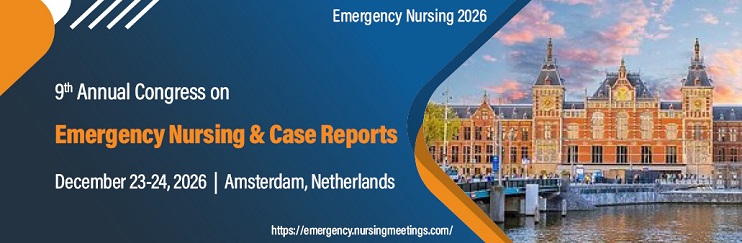
The 9th Annual Congress on Emergency Nursing & Case Reports will be held on December 23–24, 2026, in Amsterdam, Netherlands, under the theme “Transforming Emergency Nursing: Innovation, Evidence-Based Practice and Patient-Centered Care.” This international gathering is dedicated to advancing emergency nursing practice, acute care delivery, clinical decision-making, and patient outcomes by bringing together emergency nurses, nurse practitioners, physicians, critical care specialists, researchers, educators, healthcare professionals, and healthcare innovators from around the world.
The congress aims to foster scientific exchange, multidisciplinary collaboration, and professional development while highlighting the latest advances in emergency nursing, trauma care, critical care, patient safety, emergency preparedness, clinical education, and evidence-based practice.
Through keynote lectures, scientific presentations, case reports, interactive sessions, workshops, and networking opportunities, participants will gain valuable insights into emerging approaches, innovative technologies, clinical challenges, and best practices shaping the future of emergency and acute care nursing.
This international platform provides an opportunity for healthcare professionals to present research findings and clinical case experiences, discuss complex emergency situations, exchange practical knowledge, and explore innovative solutions that can strengthen emergency care systems and improve patient outcomes worldwide.
Who Should Attend?
This congress is designed for:
-
Emergency Nurses
-
Emergency Nurse Practitioners
-
Critical Care Nurses
-
Trauma Nurses
-
Intensive Care Professionals
-
Emergency Physicians
-
Acute Care Physicians
-
Trauma and Surgical Specialists
-
Pediatric Emergency Care Professionals
-
Nurse Educators and Nursing Faculty
-
Nursing Researchers and Clinical Researchers
-
Advanced Practice Nurses
-
Paramedics and Emergency Medical Professionals
-
Healthcare Administrators and Hospital Leaders
-
Patient Safety and Quality Improvement Professionals
-
Medical and Nursing Students
-
Research Scholars and Academicians
-
Healthcare Technology and Medical Device Professionals
Why Attend Emergency Nursing 2026?
This international congress provides an excellent opportunity to explore emerging developments in emergency and acute care nursing. Participants will benefit from:
-
Access to the latest emergency nursing research and clinical advancements
-
Insights into evidence-based emergency care practices
-
Discussions on innovative approaches to trauma and critical care
-
Practical case-based learning from real-world emergency situations
-
Networking with international nursing and healthcare experts
-
Opportunities for multidisciplinary collaboration and research partnerships
-
Exposure to emerging emergency care technologies and digital health solutions
-
Professional development through scientific and educational sessions
-
Opportunities to present research, case reports, oral presentations, and posters
-
Knowledge that can be translated into emergency nursing practice and patient care
Exhibitor Opportunities
The congress will provide opportunities for organizations involved in:
-
Emergency Medical Equipment and Devices
-
Patient Monitoring Systems
-
Critical Care Technologies
-
Emergency and Trauma Care Solutions
-
Point-of-Care Diagnostic Technologies
-
Digital Health and Telemedicine
-
Clinical Decision-Support Systems
-
Simulation and Nursing Education Technologies
-
Pharmaceutical and Biotechnology Companies
-
Infection Prevention and Control Solutions
-
Hospital and Healthcare Technology
-
Medical Education and Publishing
-
Research Institutions and Clinical Organizations
Join us in Amsterdam for two days of scientific exchange, clinical learning, professional networking, and collaborative discussion focused on transforming emergency nursing and improving patient-centered care.
Sessions
This session focuses on advances in emergency nursing practice, clinical assessment, triage, rapid intervention, and patient-centered emergency care. Discussions will highlight innovative nursing approaches, clinical decision-making, evidence-based protocols, and strategies for improving outcomes in high-acuity settings.
Effective triage and patient prioritization are fundamental to safe emergency care. This session explores advanced triage systems, acuity assessment, patient flow optimization, overcrowding, waiting-time reduction, and innovative approaches to improving emergency department efficiency.
This track addresses the nursing management of trauma patients from initial assessment through stabilization and ongoing care. Topics include trauma assessment, hemorrhage management, traumatic brain injury, spinal trauma, fracture care, polytrauma, and multidisciplinary trauma response.
This session examines the interface between emergency and critical care nursing. Discussions will include recognition of clinical deterioration, hemodynamic instability, airway management, mechanical ventilation, sepsis, shock, and advanced resuscitation strategies.
Cardiovascular emergencies require rapid recognition and intervention. This session covers acute coronary syndromes, cardiac arrest, arrhythmias, advanced life support, post-resuscitation care, emergency cardiac monitoring, and evidence-based resuscitation practices.
This track focuses on the emergency management of neurological conditions, including stroke, seizures, altered consciousness, traumatic brain injury, and acute neurological deterioration. Emphasis will be placed on rapid assessment, early intervention, neurological monitoring, and multidisciplinary care.
Children and neonates present unique challenges in emergency settings. This session explores pediatric assessment, emergency stabilization, respiratory emergencies, pediatric trauma, medication safety, neonatal emergencies, family-centered care, and age-appropriate emergency interventions.
The growing older population presents increasingly complex emergency care needs. This session addresses falls, delirium, frailty, polypharmacy, acute illness, geriatric trauma, dementia-related emergencies, and patient-centered approaches to improving outcomes among older adults.
Early recognition and treatment of sepsis are essential to improving survival. This session explores sepsis screening, early warning systems, antimicrobial management, infection prevention, isolation practices, and emergency nursing strategies for infectious disease management.
Effective pain and symptom management are essential components of patient-centered emergency nursing. This session examines pharmacological and non-pharmacological interventions, acute pain assessment, procedural pain management, communication, and safe medication practices.
Emergency nurses play a critical role during disasters and mass casualty incidents. This session addresses emergency preparedness, disaster triage, mass casualty management, crisis communication, resource allocation, public health emergencies, and multidisciplinary response planning.
Technology is transforming emergency care delivery. This track explores electronic health records, tele-emergency nursing, remote monitoring, artificial intelligence, clinical decision-support systems, wearable technologies, and digital tools designed to improve emergency nursing efficiency and patient safety.
Simulation-based education is increasingly important for preparing emergency nurses to manage high-risk clinical situations. This session explores simulation technologies, skills training, competency assessment, clinical education, team-based learning, and innovative approaches to emergency nursing education.
This session focuses on strategies for improving the safety and quality of emergency care. Topics include medication safety, clinical errors, infection prevention, quality indicators, evidence-based protocols, patient safety culture, and continuous quality improvement.
Emergency departments frequently manage patients experiencing acute psychological and behavioral crises. This track addresses psychiatric emergencies, suicide risk assessment, agitation, substance-related emergencies, de-escalation strategies, compassionate communication, and safe patient management.
This dedicated session provides a platform for presenting clinically significant and educational emergency nursing cases. Participants can share unusual presentations, challenging clinical situations, successful interventions, lessons learned, and innovative approaches to complex emergency care.
This forward-looking session explores emerging technologies, research directions, models of emergency nursing practice, advanced nursing roles, precision healthcare, artificial intelligence, remote care, and innovative approaches expected to shape the future of emergency and acute care nursing.
Market Analysis
The global emergency and acute care healthcare sector is undergoing significant transformation, driven by increasing demand for rapid and high-quality medical intervention, rising patient volumes, population aging, increasing prevalence of acute and chronic diseases, emergency preparedness requirements, and continued advances in healthcare technology.
Emergency departments remain a critical component of modern healthcare systems, creating increasing demand for skilled emergency nurses, advanced practice nursing professionals, clinical educators, and multidisciplinary emergency care teams. At the same time, healthcare organizations are focusing on improving patient flow, reducing waiting times, strengthening patient safety, and delivering evidence-based care in high-acuity environments.
Technological innovation is also transforming emergency nursing practice. Electronic health records, remote monitoring, point-of-care diagnostics, artificial intelligence, clinical decision-support systems, telemedicine, simulation technologies, and wearable devices are increasingly influencing how emergency patients are assessed, monitored, triaged, and managed.
The growing emphasis on patient-centered care is further changing emergency nursing practice. Healthcare providers are increasingly focusing on communication, shared decision-making, compassionate care, health equity, patient safety, and improved experiences for patients and families during stressful emergency encounters.
Key Market Drivers Include:
-
Increasing demand for emergency and acute care services
-
Growth in emergency department patient volumes
-
Aging populations and increasing complexity of emergency presentations
-
Rising prevalence of cardiovascular, neurological, infectious, and chronic diseases
-
Increasing incidence of trauma and emergency medical conditions
-
Growing emphasis on evidence-based nursing practice
-
Expansion of advanced practice nursing roles
-
Increasing adoption of digital health and telemedicine
-
Integration of artificial intelligence into clinical decision-making
-
Growing demand for point-of-care diagnostic technologies
-
Increasing investment in emergency preparedness and disaster response
-
Expansion of simulation-based nursing education
-
Greater focus on patient safety and quality improvement
-
Increasing need for multidisciplinary emergency care teams
Regional Outlook
Europe continues to represent an important environment for emergency care research, nursing education, healthcare innovation, and clinical collaboration. The Netherlands and other European healthcare systems provide opportunities for sharing approaches to emergency department organization, nursing education, patient safety, digital health, and acute care delivery.
North America continues to contribute substantially to emergency medicine and nursing innovation, particularly in advanced practice nursing, emergency care technology, clinical research, and simulation-based education.
The Asia-Pacific region represents an important growth area as healthcare infrastructure expands, emergency care systems develop, urban populations increase, and demand for trained emergency healthcare professionals continues to rise.
Future Outlook
The future of emergency nursing will increasingly be shaped by evidence-based practice, advanced nursing roles, digital health, artificial intelligence, remote monitoring, simulation-based education, precision decision-making, multidisciplinary collaboration, and patient-centered models of care.
The integration of technology with clinical expertise will create new opportunities to improve triage, early recognition of deterioration, emergency response, patient safety, clinical efficiency, and continuity of care.
The 9th Annual Congress on Emergency Nursing & Case Reports provides a timely international platform for researchers, nurses, clinicians, educators, healthcare organizations, and industry professionals to exchange knowledge and explore the innovations shaping the future of emergency nursing.
Past Conference Report
Emergency Nursing 2024
Following the successful previous edition of the Annual Congress on Emergency Nursing & Case Reports, the 9th Annual Congress on Emergency Nursing & Case Reports is pleased to continue this international platform for emergency nursing professionals, researchers, clinicians, educators, and healthcare experts.
The previous congress brought together professionals with diverse expertise in emergency nursing, trauma care, critical care, acute care, patient safety, nursing education, and emergency healthcare research. The meeting provided an international platform for sharing scientific knowledge, discussing clinical challenges, and exploring innovative approaches to emergency and acute care nursing.
The scientific program featured keynote presentations, oral presentations, poster sessions, case reports, and interactive discussions addressing a broad range of topics related to emergency nursing practice and patient care.
Key areas of discussion included emergency nursing practice, trauma and critical care, emergency assessment and triage, resuscitation, patient safety, disaster preparedness, pediatric emergencies, geriatric emergency care, clinical education, and emerging healthcare technologies.
Case-based presentations provided participants with opportunities to examine complex clinical situations and learn from real-world emergency care experiences. The exchange of clinical knowledge and practical insights contributed to meaningful discussions on improving patient outcomes and strengthening emergency nursing practice.
The meeting also encouraged the participation of researchers, young professionals, nursing students, educators, and healthcare practitioners, creating opportunities for scientific networking, knowledge exchange, and international collaboration.
Building on the scientific and professional foundation of the previous congress, the 9th Annual Congress on Emergency Nursing & Case Reports will bring together emergency nurses, nurse practitioners, physicians, researchers, educators, healthcare professionals, and industry innovators to explore emerging developments in emergency care.
Under the theme “Transforming Emergency Nursing: Innovation, Evidence-Based Practice and Patient-Centered Care,” the 2026 congress will focus on translating research and innovation into practical approaches that strengthen emergency nursing, improve patient safety, and enhance the quality of patient-centered care.
Join us in Amsterdam, Netherlands, on December 23–24, 2026, for two days of scientific exchange, clinical learning, case-based discussion, professional networking, and collaborative research focused on transforming the future of emergency nursing.
Past Reports Gallery